How to Order Lumber Online: A Complete Buyer's Guide
Whether you're a contractor ordering for a job site or a homeowner tackling a weekend project, buying lumber online saves time and money — if you know what to look for.
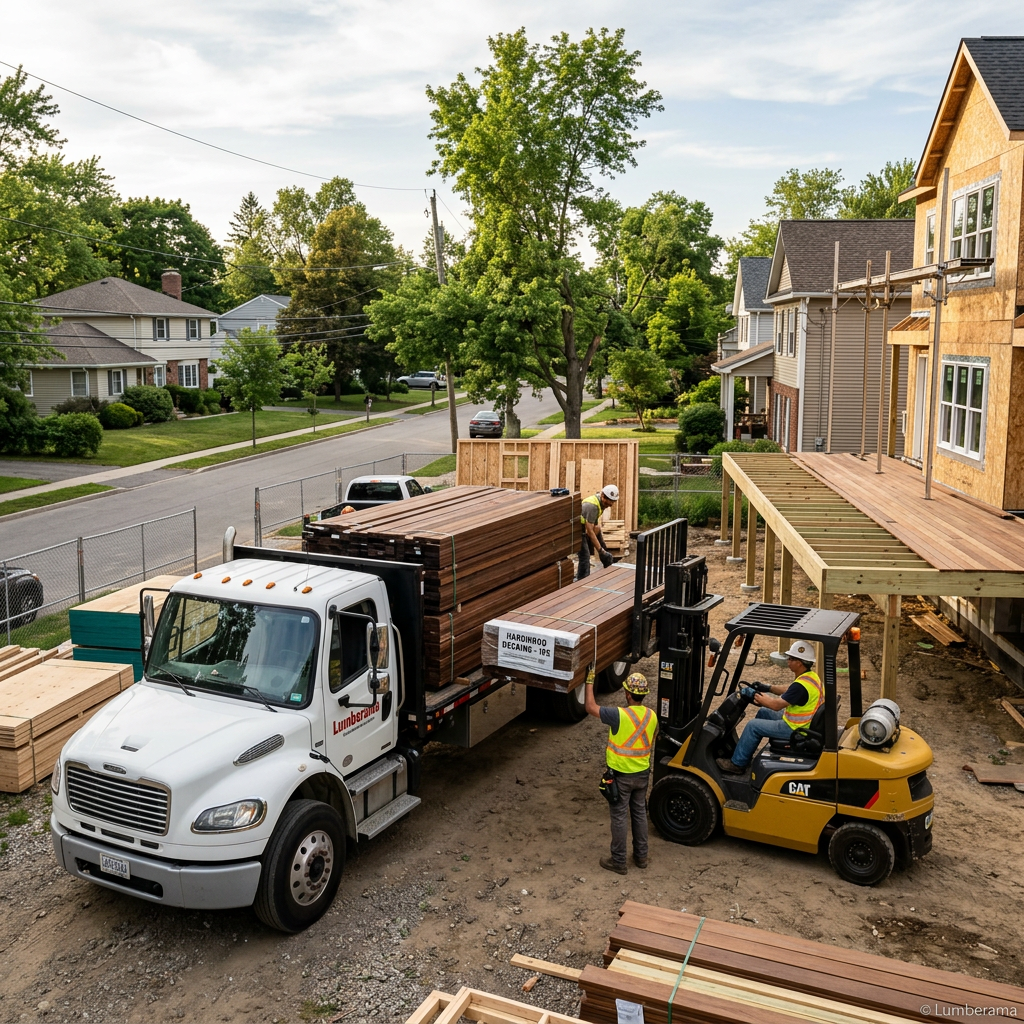
Ordering lumber online has evolved dramatically. Today, contractors and homeowners can compare prices from dozens of suppliers, get materials delivered directly to the job site, and access species that local yards simply don't carry. But the process involves more nuance than clicking "add to cart." This guide walks you through every step — from calculating what you need to inspecting the delivery.
Calculate Your Material Needs
Before contacting any supplier, know exactly how much material you need. Use a board foot calculator for rough lumber, or square footage for decking and siding. Always add 10-15% waste factor for cuts, defects, and future repairs.
Pro Tips:
- Use our free Board Foot Calculator for quick estimates
- For decking, account for joist overhangs and stair treads
- Request a full material takeoff for complex projects
- Keep a separate count for trim, fascia, and accessories
Choose the Right Species and Grade
Not all lumber is equal. The species you choose affects cost, durability, appearance, and maintenance. Lumber grades (Select, #1, #2, etc.) determine the number of knots, splits, and defects allowed.
Pro Tips:
- Structural framing: SPF or Douglas Fir in #2 or better
- Exterior decking: Ipe, Cumaru, or pressure-treated for durability
- Interior trim: Clear-grade hardwoods for a premium look
- Fencing: Cedar or pressure-treated pine for rot resistance
Request Quotes from Multiple Suppliers
Prices for the same species can vary 20-40% between suppliers depending on sourcing, inventory, and region. A Request for Quote (RFQ) ensures you get competitive pricing and can compare apples to apples on lead time, shipping, and quality.
Pro Tips:
- Specify exact dimensions, species, grade, and quantity
- Ask about minimum order quantities (MOQs)
- Request pricing for both delivered and will-call pickup
- Confirm whether prices include surfacing (S4S) or are rough-sawn
Understand Shipping and Delivery
Lumber delivery is not like ordering a package from Amazon. Most orders ship via LTL freight or flatbed truck. You need to plan for unloading — most residential sites require a liftgate or the ability to hand-unload from a flatbed.
Pro Tips:
- LTL freight: Palletized, requires liftgate or dock for unloading
- Flatbed: Ideal for large orders, requires forklift or crane on-site
- Local delivery: Some suppliers offer truck-and-driver delivery
- Always confirm site access — narrow driveways and overhead wires cause issues
Inspect Materials on Arrival
When your order arrives, inspect it before signing the delivery receipt. Check for shipping damage, correct species and grade, proper dimensions, and acceptable moisture content. Document any issues with photos immediately.
Pro Tips:
- Use a moisture meter — target 6-12% for interior, 12-19% for exterior
- Verify board count matches the packing slip
- Check end grain for excessive checking or splits
- Note any damage on the delivery receipt before signing
5 Common Mistakes When Ordering Lumber Online
Mistake
Ordering exact quantities
Better Approach
Always add 10-15% overage for waste, cuts, and defects
Mistake
Ignoring lead times
Better Approach
Exotic hardwoods can take 2-6 weeks. Order early.
Mistake
Not specifying surfacing
Better Approach
Clarify S4S (smooth four sides) vs rough-sawn to avoid surprises
Mistake
Skipping the delivery plan
Better Approach
Confirm truck access, unloading method, and someone to receive
Mistake
Not checking moisture content
Better Approach
High MC wood warps and cups after installation — always test
Why Contractors Use Lumberama
Competitive Pricing
We source from a nationwide network to get you the best prices on premium materials.
Verified Suppliers
Every vendor in our network is vetted for quality, reliability, and compliance.
Managed Delivery
We coordinate shipping logistics so materials arrive on time, properly packaged.