Wood Species
February 10, 2026
7 min read
Hardwood vs Softwood: The Complete Comparison Guide
Not all lumber is created equal. Understanding the fundamental differences between hardwood and softwood helps you make smarter material choices for every project.
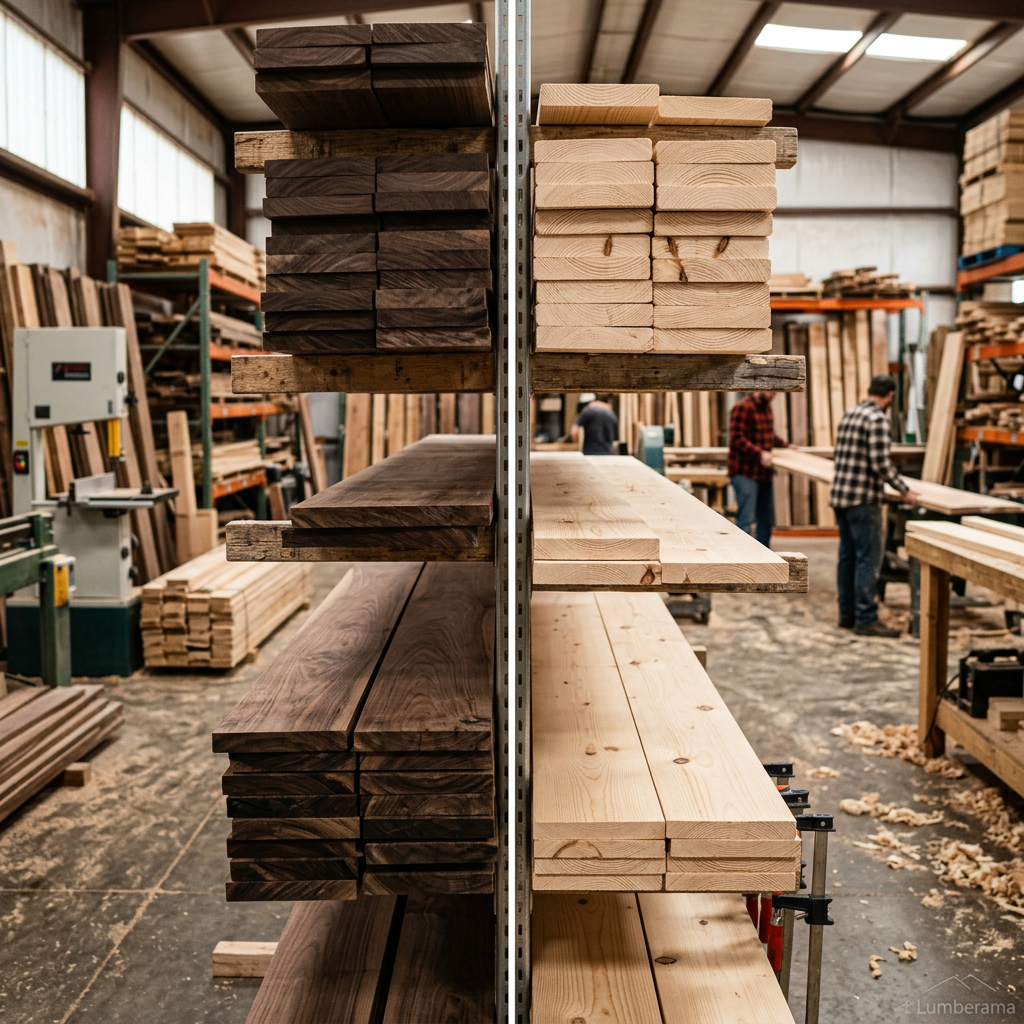
The terms "hardwood" and "softwood" are often misunderstood. They don't strictly refer to the hardness of the wood itself — balsa, one of the softest woods on earth, is technically a hardwood! Instead, these classifications come from the botanical origin of the tree. Understanding this distinction is the first step to selecting the right lumber for your project.
Side-by-Side Comparison
| Property | Hardwood | Softwood |
|---|---|---|
| Source | Deciduous (broadleaf) trees that lose leaves seasonally | Coniferous (needle-bearing) trees, mostly evergreen |
| Density | Generally denser (35–65 lbs/ft³) | Generally lighter (20–35 lbs/ft³) |
| Janka Hardness | 1,000–3,700 lbf typical range | 300–700 lbf typical range |
| Growth Rate | Slower growing, longer harvest cycles | Faster growing, more renewable |
| Cost | $$–$$$$ depending on species | $–$$ generally more affordable |
| Workability | Harder to cut, may need carbide tools | Easy to cut, nail, and screw |
| Durability | 15–50+ years depending on species | 8–20 years depending on species |
| Best Uses | Flooring, furniture, decking, cabinetry | Framing, siding, fencing, general construction |
When to Choose Hardwood
- Premium decking that needs to last 25+ years (Ipe, Cumaru, Teak)
- Hardwood flooring (Oak, Maple, Walnut, Hickory)
- Fine furniture and cabinetry (Cherry, Mahogany, Walnut)
- High-traffic commercial applications
- Projects where natural decay resistance is critical
When to Choose Softwood
- Structural framing and construction (Douglas Fir, SPF)
- Budget-friendly decking and fencing (Cedar, Pressure Treated Pine)
- Siding and exterior cladding (Cedar, Redwood)
- Interior trim and molding (Pine, Poplar)
- Projects where workability and cost matter most